











The Fascination with Unread Books: A Cultural Perspective
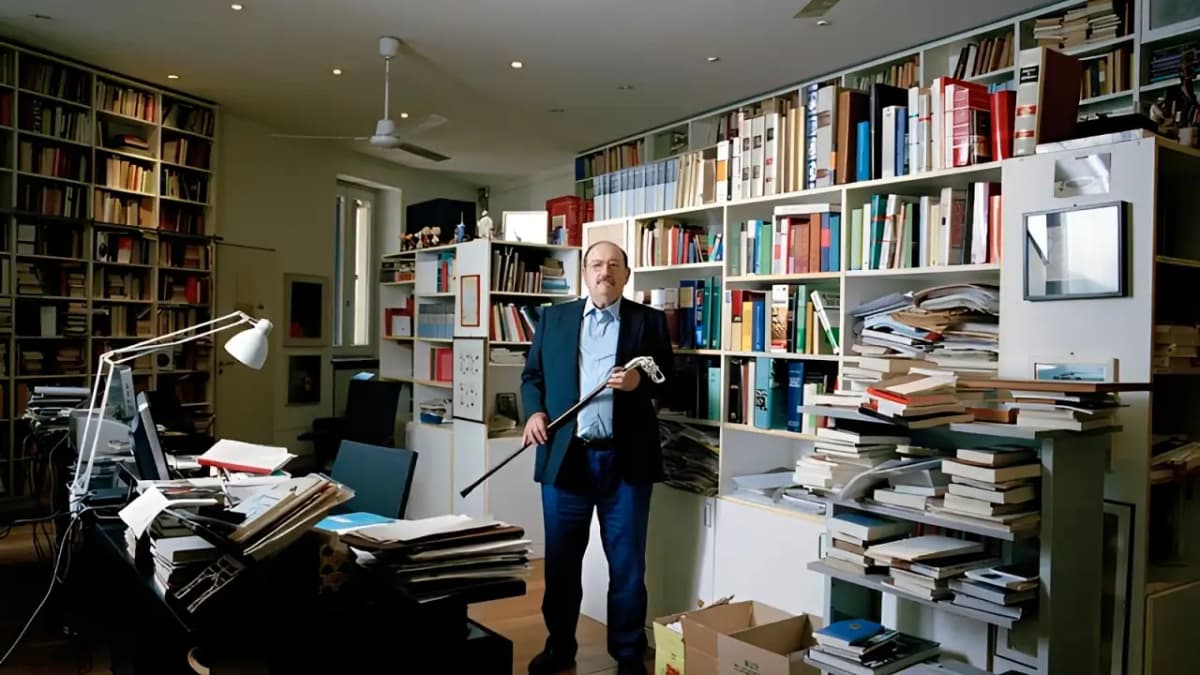
Visitors to the home of renowned author umberto eco often posed a familiar question that overlooked a deeper understanding of his extensive library, which boast
Visitors to the home of renowned author Umberto Eco often posed a familiar question that overlooked a deeper understanding of his extensive library, which boasted around thirty thousand volumes. They were curious about how many of those books he had actually read. Eco found this inquiry to be somewhat tiresome, as he believed that the unread books were, in fact, the essence of his collection. Many of us maintain a more modest version of such a library, perhaps a stack of books on our bedside table or a shelf filled with tomes whose opening pages we can barely remember. This phenomenon is frequently labeled as a personal shortcoming, but it raises the question of whether it should be perceived in that light at all. In Japanese culture, there exists a term for this particular habit: 'tsundoku,' which combines the words for piling up and leaving things for later with the act of reading. This term, which emerged during the Meiji era, was first noted in 1879 and was used in a somewhat teasing manner to describe a teacher whose shelves were laden with books he had never opened. The connotation of 'tsundoku' is one of affection rather than reproach, contrasting sharply with the English-speaking world's historical view of similar behavior as bibliomania, a condition that was once pathologized and treated as a disorder needing correction. Thus, one culture perceives a harmless quirk, while another regards it as a serious affliction.
Eco's defense of his extensive collection was rooted in practicality. He argued that a library filled with books one has completed serves as a record of past achievements, while a library of unread books is a more valuable asset, acting as a guide to future exploration. This concept was echoed by Nassim Nicholas Taleb in his 2007 work, 'The Black Swan,' where he introduced the term 'antilibrary.' Taleb posited that unread books hold greater worth than those that have been read, suggesting that a person’s collection should reflect the gaps in their knowledge rather than merely their accomplishments. This perspective transforms the towering stack of unread books from a source of shame into a daily reminder of the vast expanse of knowledge yet to be discovered, offering a unique form of humility that many individuals struggle to cultivate on their own.