










The Historic Origin of Fingerprint Identification on July 28, 1858
On july 28, 1858, a significant event in the realm of identification took place in colonial bengal, marking the inception of modern fingerprinting. this moment
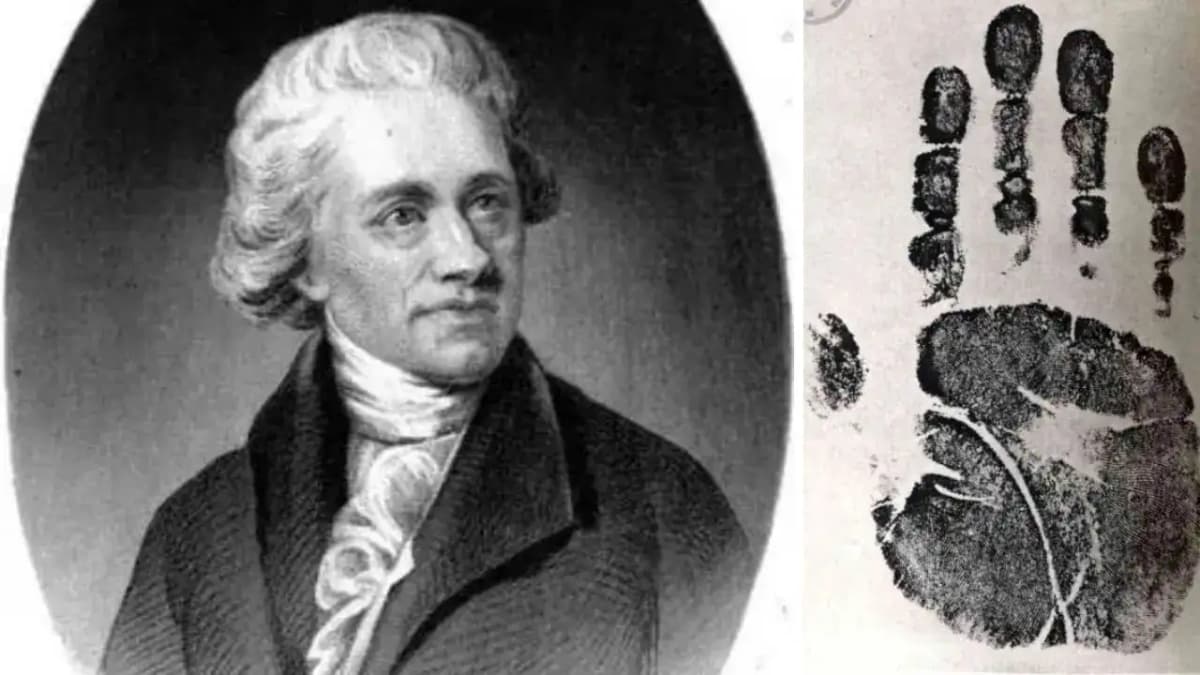
On July 28, 1858, a significant event in the realm of identification took place in colonial Bengal, marking the inception of modern fingerprinting. This moment stemmed from a simple yet profound act by a local contractor, Rajyadhar Konai, who pressed his inked hand onto a contract, thus creating the first known instance of using fingerprints for identification. Sir William James Herschel, an officer of the East India Company, was instrumental in this development. He had been stationed in Bengal since 1853 and, following the upheaval of the 1857 Mutiny, became a member of the Indian Civil Service. His role involved overseeing various administrative tasks, and during his time in Jungipoor, he encountered Konai, who was providing materials for road construction. Herschel's innovative idea to use a handprint as a signature instead of a traditional written signature was born out of a desire to ensure that Konai would not renege on their agreement. Herschel later recounted this experience in his book, The Origin of Finger-Printing, noting that the concept of using a handprint was not entirely new, as historical instances of similar practices had been documented. However, this particular application was pivotal in establishing a new method of verification in contractual agreements.
Herschel's experiment was not merely a whimsical act; it was a calculated move to prevent fraud and disputes that were rampant in colonial governance. He described the process of inking Konai's palm and pressing it onto the contract, which was accompanied by light-hearted banter about palmistry. This initial success led Herschel to further explore the potential of fingerprints. He recognized that the unique patterns on individuals' fingers were permanent and could serve as a reliable means of identification. Over the years, he began to collect fingerprints from various individuals, including government workers and prisoners, meticulously documenting their consistency over time. His records demonstrated that fingerprints do not change, which was a groundbreaking realization in the field of identification. Herschel's dedication to this practice was evident as he conducted experiments that spanned decades, including a notable comparison of fingerprints taken from Dr. R. F. Hutchinson after 21 and 31 years, which matched perfectly. This reinforced Herschel's conviction in the permanence of fingerprint patterns and their utility in preventing impersonation.