










Exploring Jantar Mantar: Delhi's Ancient Timekeeping Marvel
The vibrant atmosphere of jantar mantar road in delhi has come alive once more, this time with the cockroach janta party (cjp) making headlines. the area is fil
The vibrant atmosphere of Jantar Mantar Road in Delhi has come alive once more, this time with the Cockroach Janta Party (CJP) making headlines. The area is filled with colorful banners, catchy slogans, and a throng of spectators capturing every moment on their smartphones. This lively protest has transformed the road into a hub for expression and visibility, reminiscent of its history as a gathering place for various groups, from earnest activists to humorous entities like CJP. However, amidst the modern-day hustle and bustle, a remarkable relic from the past stands silently: the Jantar Mantar observatory, a stone structure that once served as a timekeeping marvel for the entire city, functioning without any electronic devices or apps.
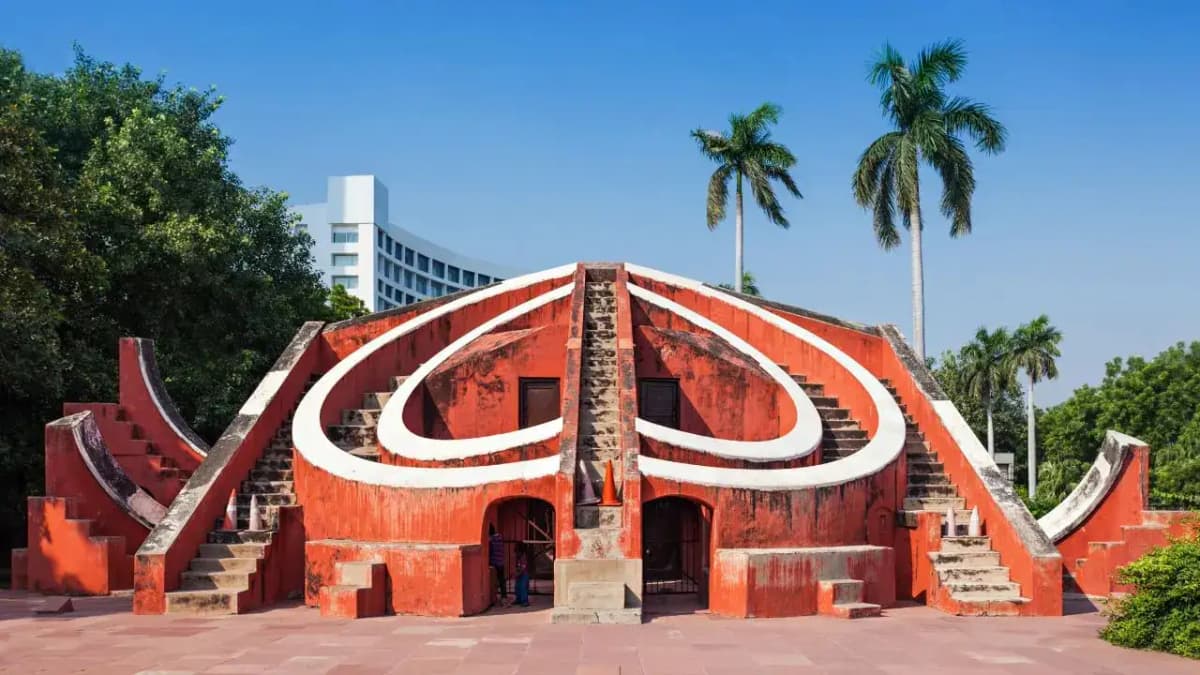
Imagine a time when checking the hour meant looking up at the sky rather than glancing at a smartphone. In the 1700s, Delhi was devoid of modern timekeeping tools, yet its inhabitants could accurately determine the time and even forecast celestial events. This was made possible by the ingenious design of Jantar Mantar, which is one of five such observatories in India, with the Delhi site being the most frequented. Visitors to this historical site often feel as though they are navigating a vast outdoor puzzle rather than a conventional museum. The grounds are dotted with enormous triangular structures, sweeping curves, and circular platforms, all of which may not resemble traditional clocks at first glance, adding an element of intrigue.